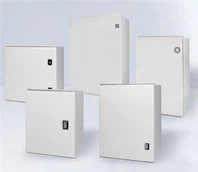
A double-bitted lock core is a high-security mechanical locking mechanism designed to enhance protection against unauthorized access, tampering, and forced entry. By incorporating dual key pins or unique key bit configurations, it significantly improves resistance to picking, drilling, and destructive attacks. In distribution boxes, double-bitted lock cores play a critical role in physical security and access control, particularly in high-risk environments. Below is a detailed analysis of their applications and technical advantages.

Core Functions and Advantages
Enhanced Anti-Tampering Resistance
The dual-row pin design increases the complexity of the locking mechanism, making it extremely challenging for traditional tools (e.g., pickers, hook tools) to manipulate. This meets CEN III-level anti-picking standards, requiring over 10 minutes for unauthorized attempts.
Unique key pin designs, such as snake-shaped grooves or offset pins, further deter bypass techniques.
Durability Against Physical Attacks
Constructed from high-strength alloy steel or stainless steel, the lock core withstands impacts, drilling, and cutting. It resists hydraulic shears and bolt cutters for over 30 minutes, ensuring long-term reliability in harsh conditions.
Granular Access Control
Each key features a distinct bit pattern, enabling hierarchical permission management. For example, electricians may hold restricted keys while administrators retain master keys, minimizing unauthorized operations.
Application Scenarios
1. Theft and Unauthorized Access Prevention
Public Infrastructure: In shopping malls or subway stations, double-bitted lock cores prevent meter tampering or energy theft.
Outdoor Equipment: Applied in streetlights and telecom cabinets, they withstand extreme weather and deliberate vandalism.
2. Operational Safety in Hazardous Environments
Industrial Sites: In mining or chemical plants, they ensure only authorized personnel can operate distribution boxes, avoiding accidental power shutdowns or live maintenance risks.
Emergency Systems: Protect emergency switches and circuit breakers from inadvertent triggering by non-technical staff.
3. Compliance and Audit Requirements
Certifications: Compliant with UL 437 (anti-theft locks) and EN 1303 (European safety standards), ensuring global interoperability.
Traceability: Key serial numbers enable audit trails, aligning with ISO 45001 occupational health and safety protocols.
Case Studies
| Scenario | Implementation | Technical Features |
|---|---|---|
| Oil Refinery Cabinets | Double-bitted lock core + Ex d explosion-proof housing | Key hierarchy for zone-specific access |
| Data Center UPS Units | Dual-bitted core + smart lock integration | Weatherproof design, Modbus protocol support |
| Rural Smart Meter Boxes | Corrosion-resistant alloy core + dual-bitted lock | Operates from -40°C to 70°C |
Selection and Installation Guidelines
Security Level Matching
CEN I: Basic protection (residential).
CEN III: High-risk areas (industrial, public facilities).
UL Grade 1: Nuclear facilities or military installations.
Compatibility
Ensure alignment with distribution box specifications (e.g., ANSI/BHMA A156.5).
Consider temperature adaptability (e.g., silicone lubrication for arctic environments).
Maintenance
Replace worn keys every 2 years to prevent wear-induced failures.
Upgrade to smart systems (e.g., IoT-enabled dual-bitted cores) for real-time monitoring.
Comparison with Single-Bitted Lock Cores
| Feature | Double-Bitted Core | Single-Bitted Core |
|---|---|---|
| Anti-Picking | ≥10 minutes (CEN III) | ≤5 minutes (CEN I) |
| Attack Resistance | Resists for 30+ minutes | Vulnerable within 5 minutes |
| Access Management | Multi-level permissions | Universal key |
| Cost | 3–5x higher | Low |
Conclusion
The integration of double-bitted lock cores in distribution boxes elevates physical security by addressing modern threats such as tampering, theft, and operational errors. Their application is critical in hazardous, high-value, or regulated environments (e.g., oil refineries, data centers). Proper selection, based on risk assessment and compliance needs, ensures long-term safety and reliability. Regular audits and maintenance further optimize performance in demanding conditions.