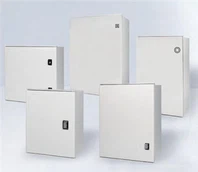
Characteristics of electrical power box manufacturer
What is the common features of electrical enclosure manufacturers?And do you know the inspection content of the power distribution cabinet?Let's see below.
Low-voltage electric enclosures include low-voltage switch cabinets, power distribution cabinets, control boxes, switch boxes and other electrical equipment enclosures. Low-voltage electric enclosures and box are widely used in power distribution, electric drive and automatic control equipment of low-voltage systems. In recent years, with the adoption of large-scale complete sets of equipment and automatic control and regulation systems, the use of low-voltage electrical appliances has also increased significantly. Therefore, in the maintenance of equipment, the maintenance of low-voltage electrical appliances is an important link, regardless of frequency, importance of equipment or workload, it is an important part of the maintenance work.
Next, Zhongfeiya Tech, a complete equipment manufacturer in China, will come to tell you about the specific items of our usual patrol inspection and maintenance of low-voltage electrical enclosures.

1. Patrol inspection of low-voltage complete equipment
In order to ensure the normal power supply to the place where electricity is used, the meters and electrical appliances on the power distribution cabinet should be inspected and maintained frequently, and records should be kept in order to analyze the operation and power consumption at any time, find problems and eliminate hidden dangers in time.

For low-voltage switchgear in operation, the following should usually be checked:
1. Whether the names, signs, and numbers of electrical components on the power distribution cabinet and the cabinet are clear and correct, whether the positions of all operating handles, buttons and keys on the panel are consistent with the actual situation on the site, whether the fixing is firm, and whether the operation is flexible.
2. The signal lights and other signal indications such as "on" and "off" on the power distribution cabinet are correct.
3. Whether the contacts of isolation switches, circuit breakers, fuses and transformers are reliable, and whether there is overheating or discoloration.
4. Whether the insulation of the secondary circuit wire is damaged or aging.
5. When the operation simulation board is marked on the power distribution cabinet, whether the simulation board corresponds to the operating status of the on-site electrical equipment.
6. Whether the glass of the meter or dial is loose and whether the meter indication is correct.
7. Whether the lighting fixtures in the power distribution room are intact, whether the illuminance is bright and uniform, and whether there is glare when observing the instrument.