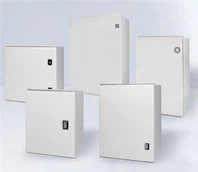
The fibre reinforced polyester material used in electrical products has the following electrical properties:
Insulation resistance (24 hour immersion):1.0x10M ohms
Lightning resistance: 180 seconds
Resistance to leakage current scratching index: 600 volts or more
The insulation protection and climbing resistance meet the relevant DIN/VDE specifications. The product not only has excellent electrical insulation properties, but also maintains its excellent dielectric properties at high frequencies and is free from electromagnetic effects and reflection of electromagnetic waves. The properties are incomparable to other non-metallic materials.
2、Resistant to chemical attack
The product is resistant to acid, dilute alkali, salt, solvents, seawater and other corrosive properties are good, while not resistant to acid, seawater corrosion.
3、Light weight and high strength
Specific strength and specific modulus is an important indicator of performance, its specific modulus is similar to that of steel, but its specific strength is 4 percentage points higher.
4、Good fatigue resistance
The results show that the compressive strength of fibre-reinforced PET composites is slightly better than that of steel, while steel and most metal materials are 40% to 50% in their tensile strength range, while the compressive strength of composites reinforced with fibre is generally above 70% to 80%.
5、Notch sensitivity
After the component is overloaded and a few fibres break, the load is quickly distributed in the original structure to restore mechanical equilibrium. This is incomparable to any other material.
6、Low thermal conductivity and low coefficient of expansion
The thermal stress caused by temperature changes is less than the temperature of the material.
7、Excellent UV anti-ageing properties
Among other things, fibre-reinforced PET has excellent ageing resistance properties. Ageing resistance test results show that its maximum ageing layer is below 50 microns in 20 years in different workplaces and in different regions. The thinnest of most cartons is 5 mm, which is less than 1% of the carton, so it does not significantly alter the mechanical properties of the carton. Its resistance to ageing is further enhanced by the use of a unique UV-resistant surface treatment.
8. Longer life
From their use in Europe, they have a life cycle of over 20 years at the very least; through simulated ageing tests carried out on them, they have a life span of 20 years, which greatly surpasses that of traditional metal products. Some companies that use this material for their pipes also claim that their pipes can reach 50 years.
9. Flame-retardant, smoke-free and non-toxic
This is a fire resistant material with a fire resistance of FV0 (best non-metallic), a fire strength of 15 (1-100), smoke is harmless and the toxicity level is ZA1 (quasi-safe).
Electricity meter boxes play a crucial role in the distribution and measurement of electricity in homes, offices, and other buildings. They are used to house the electricity meter, which records the amount of electricity used by consumers. To ensure the safety and efficiency of the electricity supply, the meter box must be made from high-quality materials that can withstand extreme temperatures, weather conditions, and other external factors.
In this article, we will introduce the various materials commonly used in electricity meter boxes and their advantages.
1. Steel
Steel is a popular material for electricity meter boxes because of its strength and durability. It can withstand harsh weather conditions, such as rain, snow, and extreme temperatures. Additionally, steel is resistant to rust and corrosion, making it a low-maintenance option.
Another advantage of using steel is its versatility. It is easy to shape and can be customized to fit different sizes and shapes of meter boxes. Steel is also commonly used in the construction of electrical cabinets, switchboards and enclosures as it is capable of protecting against physical and environmental damage.
2. Aluminum
Aluminum is another popular material for electricity meter boxes. Like steel, it is durable and can withstand harsh weather conditions. However, aluminum is lighter in weight, which makes it easier to handle during installation. It is also resistant to corrosion, which makes it low-maintenance.
Additionally, aluminum is a good conductor of electricity, which makes it an ideal choice for meter boxes that require good electrical conductivity. As with steel, the versatility of aluminum makes it an excellent choice for creating intricate designs and custom shapes for different meter boxes.
3. Fiberglass
Fiberglass is a composite material made from a mixture of glass fibers and resin. It is known for its excellent strength-to-weight ratio, which makes it a popular choice for electricity meter boxes. Fiberglass is lightweight and resistant to impact, making it durable and long-lasting, despite its relatively low weight.
Moreover, fiberglass is an excellent insulator, which means it can protect the electrical components inside the meter box from damage. It is also resistant to moisture, heat, and corrosive elements, making it an excellent choice for outdoor meter boxes.
4. Plastic
Plastic is another popular material for electricity meter boxes. It is lightweight and easy to handle, which makes it an excellent choice for small meter boxes. Additionally, plastic is resistant to rust, corrosion, and other forms of damage.
Moreover, plastic is versatile and can be molded into different shapes and sizes, making it an excellent choice for customized meter boxes. Plastic is also an excellent choice for meter boxes that are exposed to harsh weather conditions, as it is resistant to UV rays, moisture, and heat.
Conclusion
In conclusion, electricity meter boxes are essential components of the power distribution system. The materials used in the construction of meter boxes play a crucial role in ensuring the safety and efficiency of the electricity supply. The materials discussed in this article, including steel, aluminum, fiberglass, and plastic, are all excellent choices for electricity meter boxes, each with their unique benefits. By selecting the right material for the job, one can achieve optimal performance, durability, and longevity in their meter box.