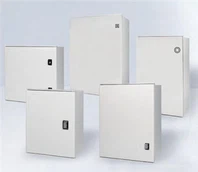
The instrument box generally includes components such as a shell, a panel, a liner, and a bracket. It is widely used in instruments, meters, electronics, communications, automation, sensors, smart cards, industrial control, precision machinery and other industries, mainly to protect components.
External structure
The instrument box is made of aluminum alloy material as the frame, ABS, density board (medium fiber board), plywood (multilayer board), etc. as the panel, and the box body is combined with tee, mouthpiece, handle, lock, etc. as accessories , Because of its reasonable design structure, meticulous professional workmanship, strong load-bearing capacity, durable The rise of various domestic industries, especially the factors required by the ISO industry, pursue the integrity of product packaging and transportation, and the application of aluminum alloy boxes has also increased. The main body of the chassis is made of high-quality aluminum alloy profiles, which have the characteristics of solid structure, beautiful appearance, and good heat dissipation performance. It is widely used in beauty salons, tool combinations, jewelry watches, stages, instruments, meters, electronics, communications, automation, sensors, smart cards, Industrial control, precision machinery and other industries are ideal cabinets for high-end instruments.
Internal structure
Its internal structure is a groove dug by EVA sponge according to the appearance of the meter, and the material of EVA is composed as follows: EVA vinyl-vinyl acetate copolymer
Ethylene-vinyl acetate copolymer is abbreviated as EVA, and the content of vinyl acetate (VA) is generally 5% to 40%. Compared with polyethylene, EVA is widely used in foamed shoes due to the introduction of vinyl acetate monomer in the molecular chain, which reduces high crystallinity, improves flexibility, impact resistance, filler compatibility and heat sealing performance. Materials, functional shed films, packaging films, hot melt adhesives, wires and cables, toys and other fields.
Generally speaking, the performance of EVA resin mainly depends on the content of vinyl acetate in the molecular chain. In 2001, the market consumption of EVA resin in my country was about 290 kt.