Overview of Distribution Boxes and Materials
▍ Functions and Importance of Distribution Boxes
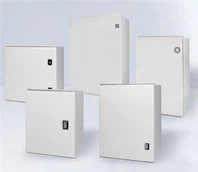
A distribution box, also known as a power distribution cabinet, is a general term for motor control centers. The first thing we notice is the difference in its enclosure, which plays a crucial role in the power distribution cabinet. As an important part of the motor control center, the enclosure of the distribution box not only protects the internal components but also ensures their orderly arrangement. It is not only responsible for protecting components such as electric meters, switches, fuses, leakage protectors, and relays inside the cabinet but also ensures that these complex components and circuits are neatly installed within the cabinet.
▍ Introduction to Common Materials

So, which materials are commonly used to make the enclosures of power distribution cabinets? This mainly depends on the product's application field and cost considerations. Generally, the following materials are selected for the outer shell of power distribution cabinets:
Cold-rolled Steel (SPCC): It is a commonly used material for power distribution cabinet enclosures. This material is favored due to its low cost and easy formability, and its thickness usually does not exceed 3.2 mm, making it very suitable for manufacturing electroplated and painted parts.
Hot-rolled Steel (SHCC): With a material thickness of T ≥ 3.0 mm, it is also suitable for manufacturing electroplated and painted parts. Although its cost is low, compared with cold-rolled steel (SPCC), it is more difficult to form, so it is more often used for making flat parts.
Copper: Mainly used for current-conducting parts. Its surface treatment usually includes nickel plating, chrome plating, or no treatment at all. However, it should be noted that the cost of copper is relatively high.
Stainless Steel: Due to its excellent corrosion resistance and strength, it is widely used in many fields. It has a variety of surface treatment methods, and chrome plating, nickel plating, or other special treatments can be selected according to requirements. Compared with copper, stainless steel is more cost-effective.
Aluminum Profiles: Due to their complex cross-sectional structure, they are widely used in various plug-in cabinets. Their surface treatment methods are similar to those of aluminum plates. At the same time, aluminum profiles are often processed using galvanized sheets (SECC and SGCC). It is worth noting that SECC electrolytic plates are divided into N-grade and P-grade. Among them, N-grade plates usually do not undergo surface treatment; although their cost is slightly higher, they can provide excellent rust and corrosion resistance. P-grade plates, on the other hand, are suitable for parts that require spraying.
SMC Composite Material: With its unique physical and chemical properties, it plays an important role in the field of electronic equipment. Its processing technology is simple, and the product performance is stable, with corrosion resistance and wear resistance, which enables it to occupy a place in the manufacturing of plug-in cabinets. At the same time, its good electrical insulation and high strength further improve the overall performance of the plug-in cabinet.
02 Details of Stainless Steel and SMC
▍ Advantages and Applications of Stainless Steel
Stainless steel is widely used in many fields due to its excellent corrosion resistance and strength. It is widely used in distribution boxes for its corrosion resistance and cost-effectiveness; it can prevent rust without additional surface treatment and has an attractive appearance. It has a variety of surface treatment methods, and chrome plating, nickel plating, or other special treatments can be selected according to requirements. Compared with copper, stainless steel is more cost-effective. For stainless steel, no surface treatment is often adopted; although the cost is slightly higher, it can bring significant rust and corrosion resistance effects. It has an elegant appearance, as well as excellent durability and grounding performance.
▍ Characteristics and Applications of SMC Composite Material
SMC composite material, with its unique physical and chemical properties, plays an important role in the field of electronic equipment. Its processing technology is simple, and the product performance is stable, with corrosion resistance and wear resistance, which enables it to occupy a place in the manufacturing of plug-in cabinets. At the same time, its good electrical insulation and high strength further improve the overall performance of the plug-in cabinet. SMC composite material is favored in distribution boxes for its chemical and physical properties, featuring corrosion resistance, high strength, and good insulation performance, although its cost is relatively high.
SMC composite material, whose full name is Sheet Molding Compound (i.e., sheet molding compound), is refined from GF (special yarn), UP (unsaturated resin), low-shrinkage additives, MD (filler), and various auxiliary agents. It has many excellent characteristics: chemical corrosion resistance, light weight and high strength, excellent fire and flame retardancy, good heat resistance, low thermal conductivity, excellent aging resistance, and a long service life. Although the price of SMC is relatively high, its excellent performance is still highly praised in the power distribution cabinet industry.
▍ Functions and Importance of Distribution Boxes
A distribution box, also known as a power distribution cabinet, is a general term for motor control centers. The first thing we notice is the difference in its enclosure, which plays a crucial role in the power distribution cabinet. As an important part of the motor control center, the enclosure of the distribution box not only protects the internal components but also ensures their orderly arrangement. It is not only responsible for protecting components such as electric meters, switches, fuses, leakage protectors, and relays inside the cabinet but also ensures that these complex components and circuits are neatly installed within the cabinet.
▍ Introduction to Common Materials
So, which materials are commonly used to make the enclosures of power distribution cabinets? This mainly depends on the product's application field and cost considerations. Generally, the following materials are selected for the outer shell of power distribution cabinets:
Cold-rolled Steel (SPCC): It is a commonly used material for power distribution cabinet enclosures. This material is favored due to its low cost and easy formability, and its thickness usually does not exceed 3.2 mm, making it very suitable for manufacturing electroplated and painted parts.
Hot-rolled Steel (SHCC): With a material thickness of T ≥ 3.0 mm, it is also suitable for manufacturing electroplated and painted parts. Although its cost is low, compared with cold-rolled steel (SPCC), it is more difficult to form, so it is more often used for making flat parts.
Copper: Mainly used for current-conducting parts. Its surface treatment usually includes nickel plating, chrome plating, or no treatment at all. However, it should be noted that the cost of copper is relatively high.
Stainless Steel: Due to its excellent corrosion resistance and strength, it is widely used in many fields. It has a variety of surface treatment methods, and chrome plating, nickel plating, or other special treatments can be selected according to requirements. Compared with copper, stainless steel is more cost-effective.
Aluminum Profiles: Due to their complex cross-sectional structure, they are widely used in various plug-in cabinets. Their surface treatment methods are similar to those of aluminum plates. At the same time, aluminum profiles are often processed using galvanized sheets (SECC and SGCC). It is worth noting that SECC electrolytic plates are divided into N-grade and P-grade. Among them, N-grade plates usually do not undergo surface treatment; although their cost is slightly higher, they can provide excellent rust and corrosion resistance. P-grade plates, on the other hand, are suitable for parts that require spraying.
SMC Composite Material: With its unique physical and chemical properties, it plays an important role in the field of electronic equipment. Its processing technology is simple, and the product performance is stable, with corrosion resistance and wear resistance, which enables it to occupy a place in the manufacturing of plug-in cabinets. At the same time, its good electrical insulation and high strength further improve the overall performance of the plug-in cabinet.
02 Details of Stainless Steel and SMC
▍ Advantages and Applications of Stainless Steel
Stainless steel is widely used in many fields due to its excellent corrosion resistance and strength. It is widely used in distribution boxes for its corrosion resistance and cost-effectiveness; it can prevent rust without additional surface treatment and has an attractive appearance. It has a variety of surface treatment methods, and chrome plating, nickel plating, or other special treatments can be selected according to requirements. Compared with copper, stainless steel is more cost-effective. For stainless steel, no surface treatment is often adopted; although the cost is slightly higher, it can bring significant rust and corrosion resistance effects. It has an elegant appearance, as well as excellent durability and grounding performance.
▍ Characteristics and Applications of SMC Composite Material
SMC composite material, with its unique physical and chemical properties, plays an important role in the field of electronic equipment. Its processing technology is simple, and the product performance is stable, with corrosion resistance and wear resistance, which enables it to occupy a place in the manufacturing of plug-in cabinets. At the same time, its good electrical insulation and high strength further improve the overall performance of the plug-in cabinet. SMC composite material is favored in distribution boxes for its chemical and physical properties, featuring corrosion resistance, high strength, and good insulation performance, although its cost is relatively high.
SMC composite material, whose full name is Sheet Molding Compound (i.e., sheet molding compound), is refined from GF (special yarn), UP (unsaturated resin), low-shrinkage additives, MD (filler), and various auxiliary agents. It has many excellent characteristics: chemical corrosion resistance, light weight and high strength, excellent fire and flame retardancy, good heat resistance, low thermal conductivity, excellent aging resistance, and a long service life. Although the price of SMC is relatively high, its excellent performance is still highly praised in the power distribution cabinet industry.