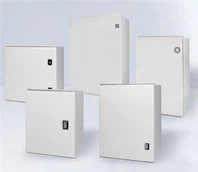
Advantages
- Good corrosion resistance: The plastic material itself has excellent chemical corrosion resistance, with strong resistance to chemical substances such as acids, alkalis, and salts. It is not prone to rusting and corrosion, and can adapt to harsh outdoor environments like seaside areas and chemical industrial zones.
- Excellent waterproof and dustproof performance: Through reasonable structural design and sealing treatment, a high protection rating can be achieved, such as IP65 or even higher. It effectively prevents water and dust from entering the box, protecting the internal electrical equipment.
- Good insulation performance: It has good electrical insulation performance, which can effectively avoid safety accidents caused by leakage of internal electrical components, ensuring the safety of personnel and equipment.
- Strong impact resistance: Some plastic materials, such as PC, have high strength and toughness. When subjected to a certain degree of external impact force, they are not easy to crack or be damaged, and can withstand accidental collisions in outdoor environments.
- Lightweight: Compared with metal materials, plastic waterproof boxes are significantly lighter in weight, making them easier to carry, install, and maintain. This reduces labor intensity and construction costs.
- Good weather resistance: After special formulation and treatment, it can resist the influence of factors such as ultraviolet rays and changes in high and low temperatures during long-term outdoor use. It is not prone to problems such as discoloration, embrittlement, and deformation, and has a relatively long service life.
- Lower cost: Compared with some metal materials, the cost of plastic materials is relatively low, making outdoor plastic waterproof boxes highly cost-effective. While meeting the protection requirements, they can save costs for users.
- Easy to process and form: The plastic material is easy to process and form. According to different design requirements, waterproof boxes of various shapes and specifications can be produced through processes such as injection molding and blow molding to meet diverse application needs.