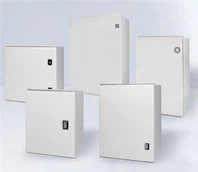
A power, distribution, submetering, and meter box are all types of electrical enclosures that contain and protect electrical equipment from the environment, such as moisture, dust, and other elements. They all provide an interface between the user of the electrical devices and the electricity going to them.

Power Box
A power box typically houses a circuit breaker or is the box for a power strip. It is typically installed in a home or small business and is usually the first box that electricity runs through when entering the building. It will contain the main circuit breaker, other sub-circuits, and could also contain a fuse box.
Distribution Box
A distribution box is also known as a circuit breaker panel. It contains circuit breakers and bus bars that are used to make connections with the various circuits in the house. It is the main panel where the other sub-panels and circuits lead to. It is possible to have multiple distribution boxes in one building.
Submetering Box
The submetering box is slightly different from a distribution box in that it adds a monitoring function to the circuits. The submetering box enables the user to track how much power is being used on each individual circuit. This is done through the use of a submeter which records the current, voltage, and power usage for each circuit.
Meter Box
The meter box is where the utility meters the usage of electricity. This box contains the meter that is used to measure the amount of power used by the consumer. The utility company will install the meter box and the meter and read their usage at periodic intervals.
While the differences between these boxes may seem small, each one is designed to perform a specific function. The proper installation of any of these boxes is essential for the safety of the operator and the building. The size of the boxes will depend on the type being used and the amount of equipment being housed in them.
In conclusion, a power, distribution, submetering, and meter box are all types of electrical enclosures that house electrical equipment and protect it from the environment. Each type has a specific purpose and the size of the boxes will vary depending on the contents. Understanding the different boxes and their purposes is important for the safety of the building and its occupants.


The dimensions of the box are calculated as follows
1, the upper end of the main switch to leave a certain distance (to the site site into the cable with)
2, the lower end of the main switch to the first row of sub-switches to leave a certain distance (for workers to install copper plates and wiring)
3, the first row apart on the second row of sub-switches to leave a certain distance (to workers wiring and site site out of the line with)
4, the second row of sub-switches and secondary components to leave a certain distance between (to workers wiring and site wiring)
5、The last row of components should be left at a certain distance from the bottom of the box (for site wiring)
Note: The above "certain distance" needs to be determined by the current size of the component as well as the size of the copper plate and the wire diameter of the alignment.