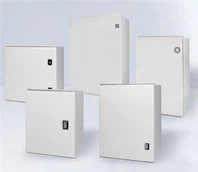
The heat resistance temperature of 316 stainless steel distribution boxes is not determined by a single factor, but is influenced by multiple factors such as material characteristics, structural design, internal components, and environmental conditions. It can be divided into the following categories:
1, The performance limitations of the material itself
The composition and microstructure of 316 stainless steel directly determine its stability at high temperatures and are the fundamental factors for heat resistance.
Alloy element content
316 stainless steel contains 16-18% chromium (Cr), 10-14% nickel (Ni), and 2-3% molybdenum (Mo), which endow it with excellent corrosion resistance and high temperature stability
- Chromium forms an oxide film (Cr ₂ O3), which prevents further oxidation at high temperatures. However, if the temperature exceeds 870 ° C, the oxide film will rupture due to "grain boundary carbonization", leading to a decrease in the material's oxidation resistance;
- Molybdenum enhances the creep resistance at high temperatures (the ability of materials to slowly deform under high temperature and stress), but when it exceeds 900 ° C, the solid solution strengthening effect of molybdenum weakens, and the material strength will significantly decrease.
Heat treatment condition
- 316 stainless steel is usually subjected to "solution treatment" (heating at 1050-1150 ° C and then water cooling) to obtain a uniform austenite structure. If not subjected to standardized heat treatment, there may be carbide precipitation inside the material, which can easily lead to intergranular corrosion at high temperatures and indirectly reduce heat resistance reliability.
2, Structure and heat dissipation design of distribution box
The structural design determines whether the enclosure can maintain stability in high temperature environments by affecting the "heat transfer efficiency". The core factors include:
Box thickness and surface area
- Thickness: Thin plates with a thickness of 1.5mm have faster thermal conductivity compared to thicker plates (such as 3mm), but their structural rigidity at high temperatures is weaker (such as long-term sealing failure due to thermal deformation above 800 ° C);
- Surface area: The larger the surface area (such as with a heat dissipation rib design), the higher the heat dissipation efficiency, which can reduce the temperature accumulation inside the box (but sealing protection levels such as IP66 will limit the heat dissipation structure, requiring a balance between protection and heat dissipation).
Sealing and ventilation design
- The IP66 protection level requires "complete dust prevention+strong water spray prevention", and rubber sealing rings (such as silicone and fluororubber) need to be used for sealing. The upper temperature limit of the sealing ring (silicone about 200 ° C, fluororubber about 260 ° C) will limit the overall heat resistance of the box. If the temperature of the box exceeds the temperature resistance of the sealing ring, it will cause the seal to fail and lose its protective performance;
- The sealed structure without active ventilation (such as fans) typically results in a temperature inside the box 10-30 ° C higher than the ambient temperature (depending on the heating of internal components), further compressing the heat resistance margin.
3, The tolerance limit of internal electrical components
The actual heat resistance temperature of the distribution box is mainly determined by the internal components, rather than the stainless steel box itself (316 stainless steel has much higher heat resistance than the components):
Rated operating temperature of components
- The insulation materials (such as polyamide, epoxy resin) and metal contacts of terminal blocks, circuit breakers, contactors, cables and other components have limited heat resistance:
- The rated working temperature of ordinary industrial components is mostly -25 ° C~+70 ° C, and high-temperature models (such as heat-resistant plastics) can reach -40 ° C~+120 ° C;
- After exceeding the temperature resistance of the component, the insulation layer will age and crack (causing short circuits), and the oxidation of the contacts will intensify (leading to increased contact resistance and more severe heating), ultimately causing faults.
Internal heating load
- If the components inside the distribution box (such as frequency converters and power modules) generate a large amount of heat during operation, it may cause the temperature inside the box to rise (for example, when the ambient temperature is 30 ° C, the temperature inside the box may reach 50-60 ° C). Even if the ambient temperature does not exceed the standard, the internal heat accumulation may exceed the temperature resistance of the components, indirectly limiting the "actual tolerable ambient temperature" of the box.
4, External environment and operating conditions
Environmental conditions affect the actual temperature of the enclosure through "input heat", including:
Environmental temperature and heat source
- Direct ambient temperature: If installed in high temperature areas (such as steel plant workshops, tropical outdoor areas), the ambient temperature itself may reach 40-60 ° C, and the heat generated inside the box can easily exceed the temperature resistance of the components;
- External heat source radiation: When in close proximity to equipment such as boilers and ovens, thermal radiation can cause the surface temperature of the box to be 20-50 ° C higher than the ambient temperature (such as in direct sunlight outdoors, the surface temperature of the box may reach 70-80 ° C).
The synergistic effect of corrosive environment
- High temperature accelerates the corrosion rate of 316 stainless steel in corrosive media such as salt spray and sulfides. For example, in high humidity coastal environments above 50 ° C, the passivation film of 316 is more easily damaged by chloride ions, leading to local corrosion (pitting corrosion, crevice corrosion), weakening the structural strength of the box, and indirectly affecting its stability at high temperatures.
5, Manufacturer's design and testing standards
The processes and testing standards of different manufacturers can result in differences in the heat resistance temperature of distribution boxes of the same specifications:
- Some manufacturers will verify overall reliability through "high-temperature aging testing" (such as continuous operation for 1000 hours in a 70 ° C environment), and clearly label the "rated operating temperature range" (such as -40 ° C~+60 ° C);
- If high-temperature resistant components (such as fluororubber seals and ceramic terminals) are selected during design and heat dissipation is optimized (such as built-in heat sinks), the heat-resistant temperature can be increased to above+80 ° C.
summary
The heat resistance temperature of 316 stainless steel distribution box is the comprehensive result of material heat resistance limit, structural heat dissipation capacity, internal component temperature resistance, and environmental input heat. Among them, the rated temperature resistance of internal components is the most critical limiting factor (usually determining the overall heat resistance upper limit of 60-80 ° C), while the heat resistance performance of stainless steel material itself (870 ° C long-term) only works under extreme working conditions (such as short-term high temperature in fire). In practical applications, it is necessary to follow the "rated operating temperature range" marked by the manufacturer, avoid approaching heat sources, and ensure ventilation (within the allowable range of protection level).